One Hundred Styles, Two Hundred Pieces Each: How a 20,000-Piece Order Stays Organised
A large order fails for small reasons. Not the plating, not the design, but one style counted short, one variant bagged with another, one carton labelled for the wrong market. At a hundred styles and two hundred pieces each, the work is less about making the jewellery than about keeping a hundred separate promises intact until they leave the building.
What this order actually is
A long-standing customer in the United States placed this production order last month. It covers more than a hundred styles across earrings, brooches, necklaces and rings, at 200 pieces per style, which is over twenty thousand pieces by simple arithmetic.
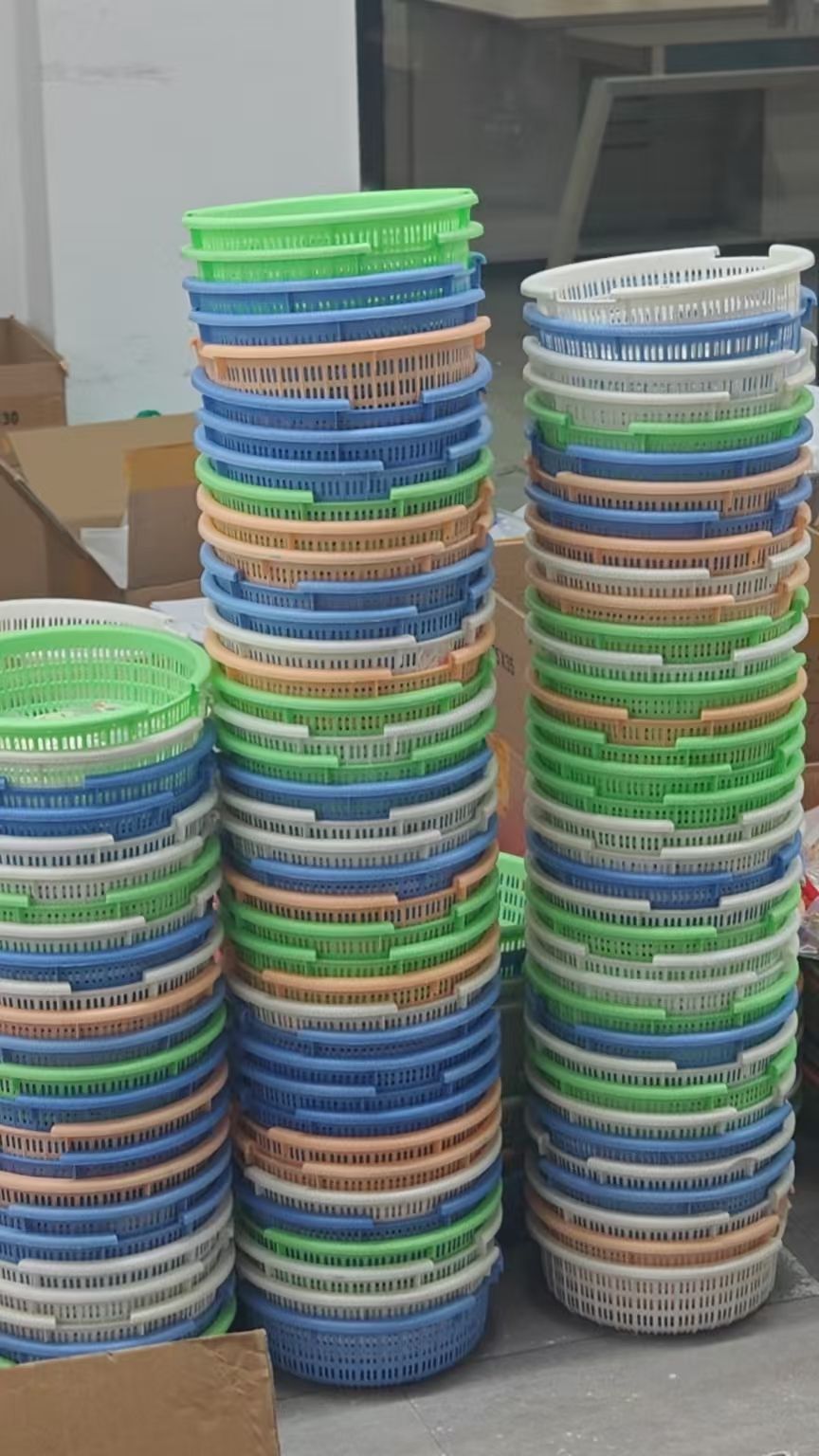
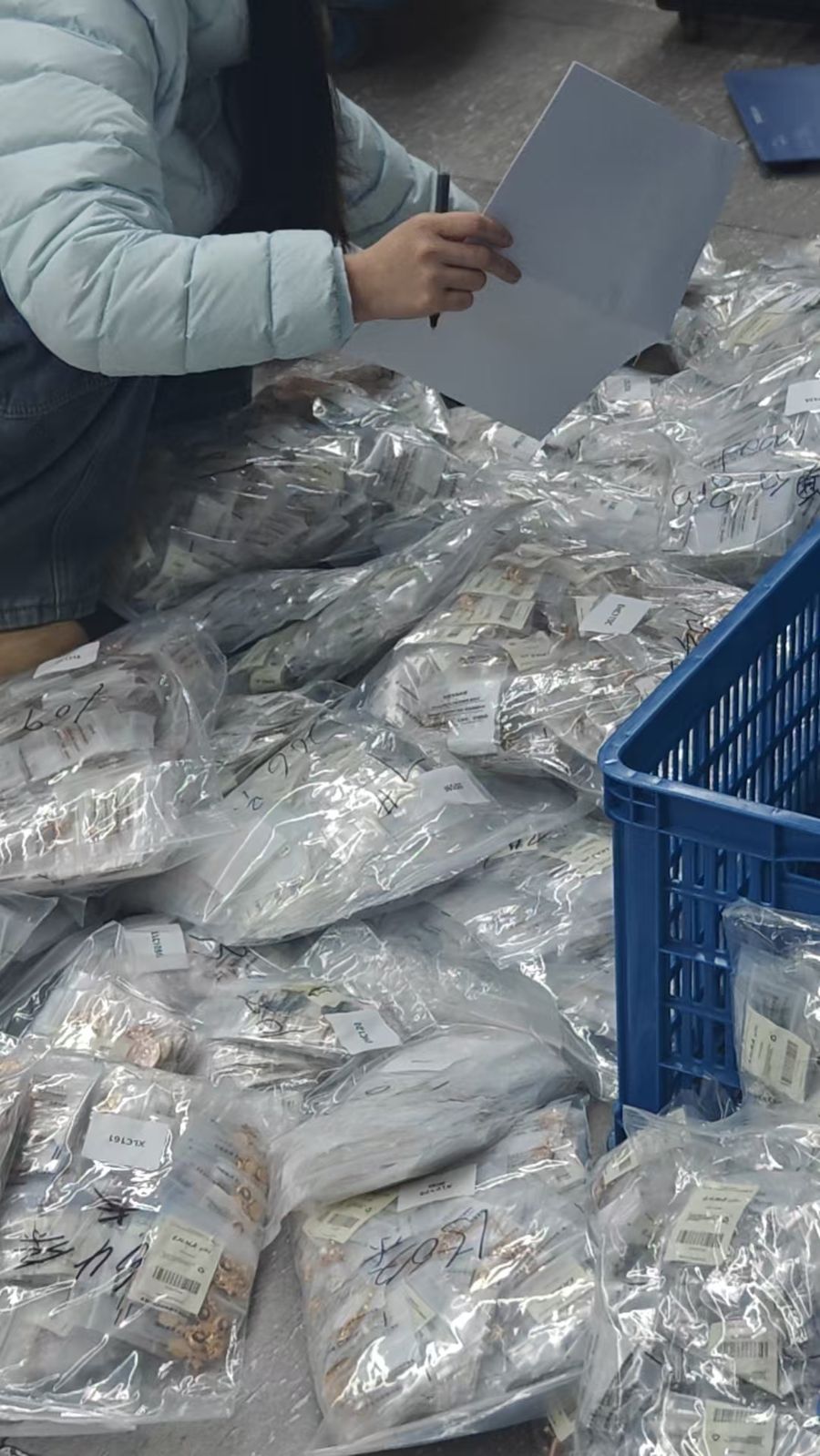
Tomorrow the batch moves through a single day of sorting, quality checking, repacking by style and then dispatch packing. The photographs here are the state before that day: bagged pieces waiting to be reconciled against their lists, baskets stacked ready, and a counting station with components sorted by colour.
Why sorting comes before quality checking
A hundred styles in one room is not a quality problem, it is an identification problem. If the pieces are checked in the order they arrive, a checker spends most of the day asking which style is in hand. Sort first, and every later step works on one style at a time with a known count.
The sequence that holds at this volume is: sort by style, count to the ordered quantity, check that style against its record, bag and label, then build the cartons from the labelled bags. Each step has one question to answer, which is why it survives a busy day.
The four places a large order goes wrong
| Failure | What it looks like on the floor | What prevents it |
|---|---|---|
| Count short | 199 pieces in a bag, discovered at the customer | Weigh or count against a fixed quantity per style, then re-count the sealed bag |
| Style mix-up | Two similar designs in one bag | One style per bag, with the style code on the bag label |
| Variant loss | Colour or size missing from part of the order | Variant written on the bag, checked against the printed list |
| Carton error | Correct goods, wrong destination or wrong list | Packing list per carton, with the carton reference visible on the box |
None of these are exotic. All four are ordinary, and all four are cheap to catch on the bench and expensive to catch after dispatch.
Why the components are sorted by colour first
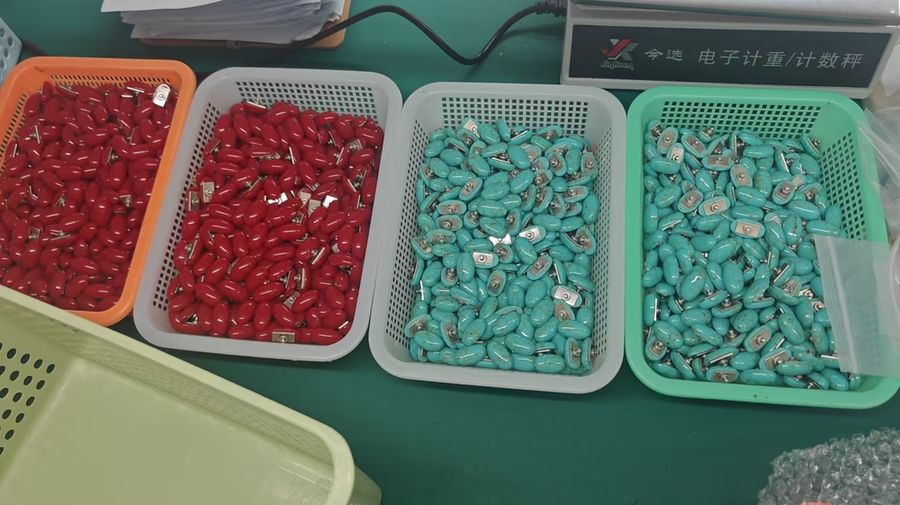
Component bins exist because counting and colour do not happen at the same speed. One person can count quickly; judging whether a red matches the approved red takes longer. Splitting the two tasks means the count does not wait on the colour decision, and the colour decision is made once per family rather than once per bag.
It also creates a physical checkpoint. If a colour family is short, you know before the bags are sealed, not after the cartons are built.
What a buyer should ask before a batch of this size
Who owns the count? One named person per style, or a two-person check. "The team" is not an answer at a hundred styles.
Where is the reconciliation point? The moment when the counted bags and the printed list are compared, and what happens to a discrepancy.
How is the batch staged? Whether the whole order is checked before packing starts, or style by style with cartons built in parallel. The second is faster; the first gives one clean gate.
What is the fallback if a style is short? Remake, substitute, or ship the balance separately. Deciding this in advance avoids a conversation under time pressure.
What this looks like from the buyer's side
For the customer receiving this order, the useful artefacts are not the photographs. They are the counting sheet, the per-style bag labels, the packing list by carton, and the dispatch record. The photographs show that the work is happening; the documents show what was done.
This batch is scheduled for sorting, checking and repacking tomorrow, with dispatch packing after that. Until the handover record exists, the accurate status is: in production, about to be sorted.
Questions buyers ask about large style counts
Is 200 pieces per style a normal bulk quantity?
Yes, for a repeat order with an established style. Our production minimum for a new design is 60 pieces per style, and 200 is a volume that allows plating and packing to be planned in batches.
How long does a hundred-style order take to sort and pack?
It depends on how well the styles are labelled and how many variants exist. The sorting day is usually one shift at this volume; the packing depends on how many cartons and how complex the presentation is.
Should I split a large order into several shipments?
Only if the split is decided before packing and reflected in the carton list. A split decided at the loading door produces two records that do not match.
What record should I ask for before dispatch?
The count per style, the packing list by carton, the QC release line and the tracking number at handover. Four documents cover the whole order.
Planning an order at this scale?
Send TEYING the style count, pieces per style and the date the goods must arrive. We will tell you how the batch will be staged, where the count is reconciled and what the dispatch record will contain before the first bag is sealed.