20 Pairs Instead of 2,000: What a Real Ready-Stock Order Looks Like
You can buy 20 pairs from a jewelry factory when the design is already in stock. Our 60-piece minimum applies to custom production, where the mold, the plating batch and the packaging are set up for your version. A stock order skips that setup, so the price, the lead time and the questions worth asking before you pay all change.
The order this guide is built on
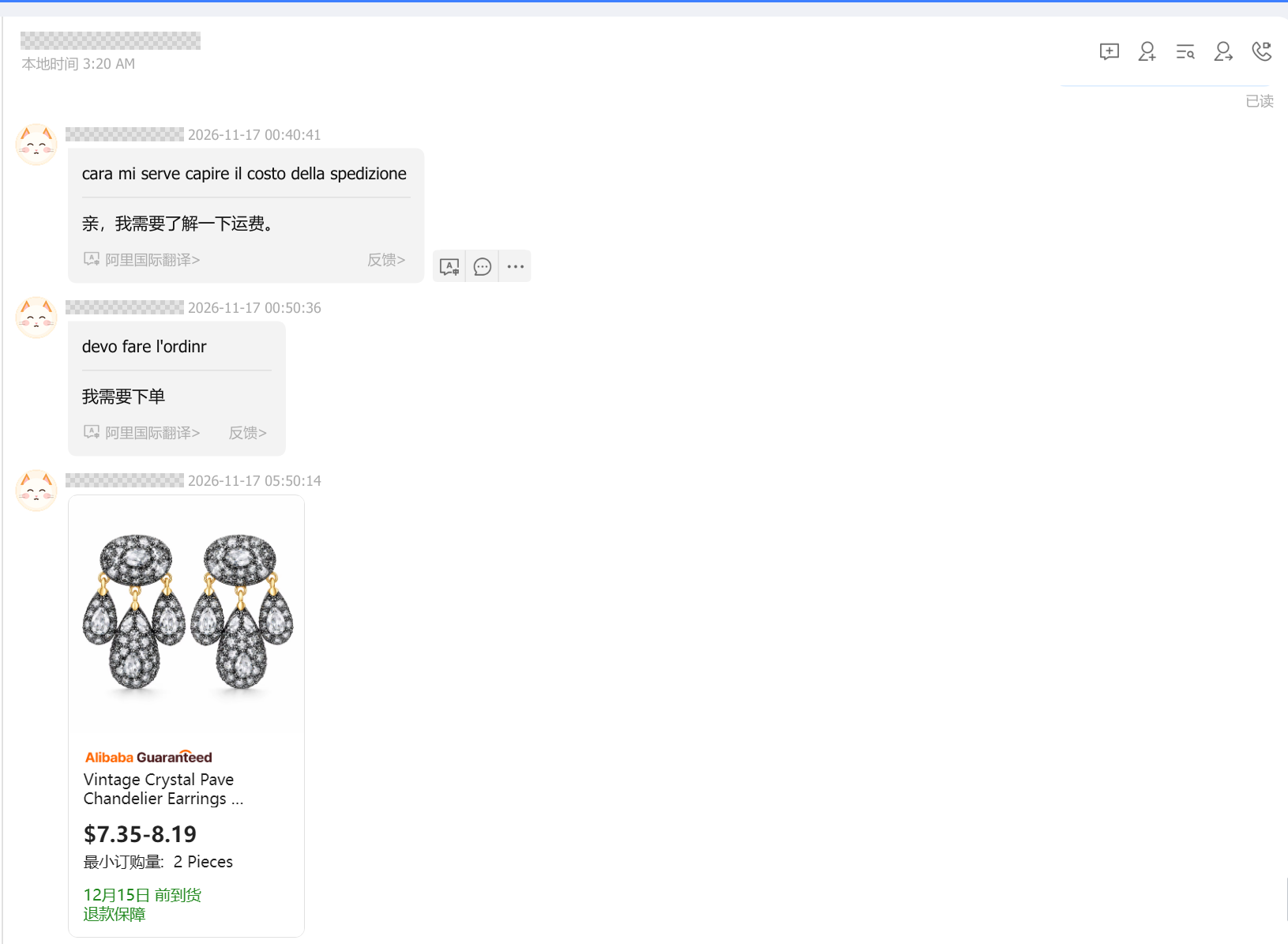
On 16 November 2026 an Italian buyer sent us a product card for a black crystal chandelier earring and said she liked it. We answered with what the model actually was: black AAA cubic zirconia, 23 by 33 mm, priced in tiers that step down as quantity rises. She then asked for a vertical video, filmed in white gloves, showing how the stones catch the light.
That request explained the order. She was not buying for herself. She needed material she could hand to her own customer, and she wanted to see the finish move before she committed to twenty pairs.
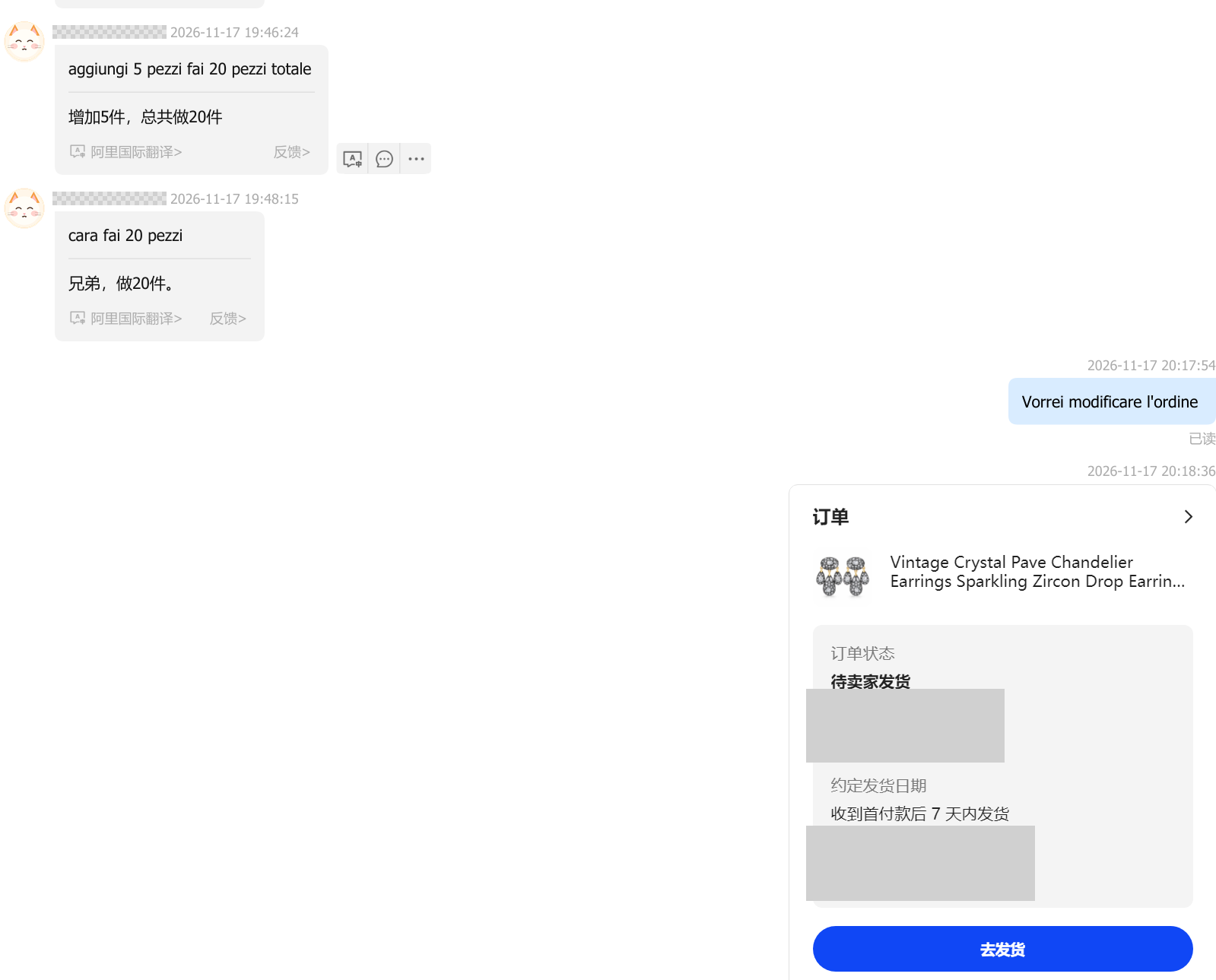
The next day she asked about shipping cost and said she needed to place the order. Before paying she changed the quantity, adding five pairs to make twenty, and we amended the order before the card payment cleared. One day later, with the parcel not yet dispatched, she asked a question that matters more than the first order: if this batch sells out, will you still have it in stock?
What the 60-piece minimum does and does not cover
The two routes get mixed up in the first email, and the quote that comes back then answers the wrong question.
| Decision | Custom production | Ready-stock reorder |
|---|---|---|
| Design setup | CAD, mold and a plating batch built for your version | None, the design already exists |
| Minimum | 60 pieces per style | Small quantities, for example 20 pairs |
| Sample | First sample 14 to 18 days typical | No sample, video and photos instead |
| Price basis | Quoted against your brief | Tier that moves with quantity |
| Lead time | 2 to 3 weeks after sample approval | Dispatched from inventory |
| What you can still change | Color, size, logo, packaging | Quantity, not the specification |
The confusion runs both ways. A buyer asks for 20 pieces of a new design and receives a 60-piece quote. Another expects stock pricing on a model that would need a mold. Naming the route in the first message, custom or stock, saves a week of email and usually a second quotation.
Four things to settle before you pay for stock
1. Base metal and plating. The conversation above settled the stone grade and the size. It did not state the base metal. Ask for the metal and the plating thickness in writing, because AAA cubic zirconia can sit in brass, in 925 silver or in stainless steel, and the answer changes both the price and how the piece wears.
2. Pair or piece. Twenty pairs is forty pieces. The unit decides the invoice, the carton count and the freight weight, so write it into the order.
3. The window for a quantity change. Change the number before payment and ask for a revised order you can see. After payment the amendment becomes a separate conversation with its own timing.
4. Who confirms dispatch. The order card carries a dispatch window counted from the first payment. Ask for the tracking number and the carrier before that window closes, not after it has passed.
What to ask for when you cannot get a sample
Stock leaves no time for a physical sample, so the substitute is evidence. Ask for a short video on a white surface under daylight, a close-up of the stone setting, the earring held in a gloved hand so the sparkle reads against the glove, and the weight on a scale. Our buyer asked for the gloved video before she paid. That sequence, evidence first and payment second, protects both sides: she knew what was arriving, and we knew the order was real.
If the piece will be photographed for a product page, say so at this point. A vertical frame and a clean background change which angle of the earring you need, and it is cheaper to film once than twice.
Why the restock question is the real signal
The question about stock running out is the first sign of a repeat buyer. It deserves a straight answer rather than a sales answer. Tell the buyer where the batch stands, how long the current stock is expected to last at her sell-through, and whether a reserve is possible. A supplier who can answer that in one message is easier to reorder from than one who has to check and forget.
Ready-stock questions buyers ask
Can I order fewer than 60 pieces if the design already exists?
Yes, when the item is in stock and you are reordering an existing design. The 60-piece minimum applies to custom production, where the mold, plating batch and packaging are made for your version. For stock, the working minimum is what the supplier can ship from inventory, and the price moves with that quantity.
Does a ready-stock order still need a written specification?
Yes. Record the stone grade, the dimensions, the base metal, the plating and the unit you are buying. A short written record is what makes the second order match the first, even when you never asked for a sample.
What should I confirm before paying a stock invoice?
Base metal and plating, pairs or pieces, the dispatch window and who supplies tracking, and the position on returns or replacement for transit damage. Four lines in the chat are enough.
Can you hold stock while my buyer confirms?
Ask. Holding depends on the batch position and on how long the hold lasts. A supplier may hold a small quantity for a stated period, or may prefer to ship now and reserve production for the next batch.
Send a stock enquiry that gets a same-day answer
Send your stock enquiry to TEYING with five details: the style reference or a clear photo, the pairs you need per style, the base metal and plating you want, the date you need the parcel, and whether you need video or packaging material with the order. If the design is not in stock, we will tell you which route it needs, stock or custom production, and what the minimum would be.