TEYING BUYER GUIDE · UPDATED AUGUST 26, 2026
How to Get an Accurate Custom Jewelry Quote Without Going Back and Forth for Weeks
A useful custom jewelry quote starts with a usable production brief. This guide explains which details affect price, what a factory needs to review, and how to compare quotations without choosing the cheapest number by mistake.
The short answer: an accurate quote needs a production brief, not only a product photo
A factory can give a rough indication from a reference image, but a dependable custom jewelry quote needs the variables that control material use, labor, finishing, packaging, and order quantity. The most useful brief states the jewelry type, dimensions, material or preferred finish, quantity per style, target market, packaging requirement, and whether the buyer wants a catalog adaptation or a new development.
The first quote does not need to be final, but the buyer and factory should be pricing the same product. A quote that omits plating, stone setting, clasp type, or packaging may become expensive after sampling.
The following is an illustrative procurement scenario, not a claim about a named customer or a published TEYING order.
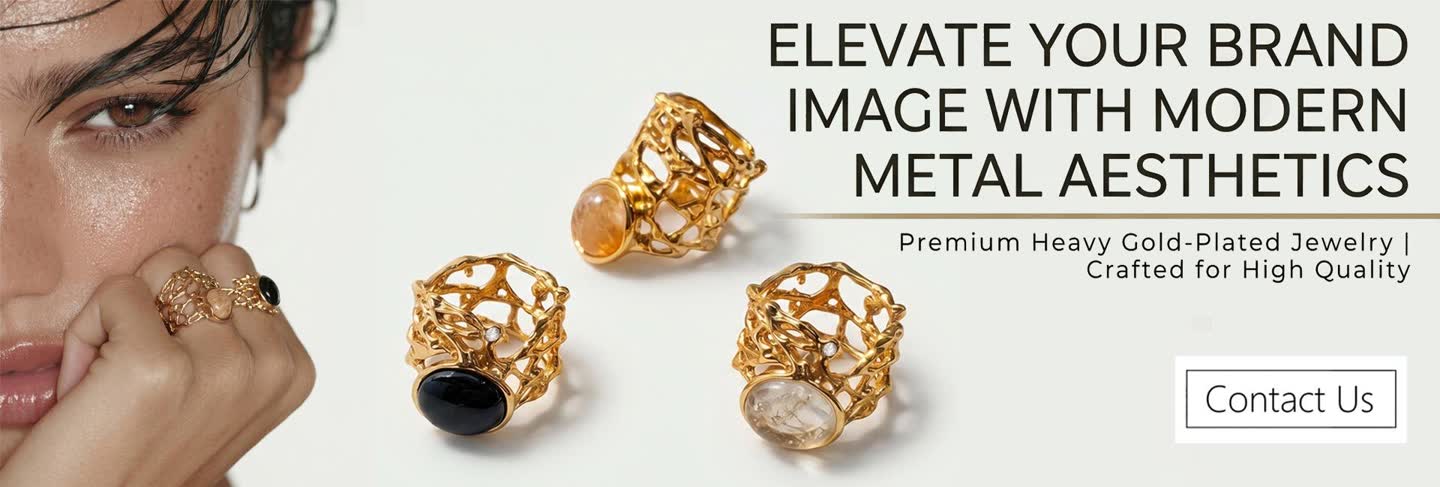
An anonymous boutique brand came to a Yiwu supplier with a photo of a chunky gold-tone ring and a target unit price copied from a marketplace listing. During sampling, the buyer clarified that the ring needed a heavier body, polished interior, custom sizes, a branded pouch, and a gift box. The revised price was higher because the original quote had never included those requirements.
The brief had changed: the buyer had priced a visual idea, then asked the sample to deliver a retail-ready product.
Which details change a custom jewelry quote?
1. Product construction and dimensions
Two pieces with the same silhouette can have different costs if one is hollow and the other is solid, or if one uses a simple jump ring and the other needs a custom clasp. Send approximate length, width, thickness, weight expectation, stone size, ring size range, chain length, and closure type when those details are known.
For a necklace, for example, a factory needs more than “pendant necklace.” Chain type, chain length, pendant dimensions, bail construction, stone setting, and finishing all influence the work. TEYING’s pendant necklace manufacturing page shows the kind of detail that makes an RFQ easier to price.
2. Material, plating, and color
“Gold jewelry” can describe gold-plated brass, sterling silver with gold plating, vermeil, or another construction. Those options do not carry the same material, process, wear, or compliance questions.
Ask the factory to state the base material, plating or surface process, color reference, and any required component documents in the quotation. If you have a target gold tone or a previous approved sample, include it. If you do not, ask for options rather than assuming a color name defines a specification.
For a broader comparison, link this article with the gold-plated jewelry manufacturing page, 925 sterling silver jewelry manufacturing page, and the brass vs 925 silver comparison.
3. Quantity and order structure
Quantity should be listed per style, not only as a total number. A 1,000-piece order across one style is a different production plan from 1,000 pieces split across ten styles and three colors. Sample quantity, first bulk quantity, expected reorder, and mixed-style plan should be separated.
MOQ is also project-dependent. Catalog styles, modified catalog styles, and fully new molds may have different starting quantities. The low MOQ jewelry manufacturing page explains why quantity per style and total order plan should be discussed together.
4. Packaging and retail preparation
A quote for loose jewelry is not the same as a quote for jewelry packed for retail. State whether you need logo cards, pouches, boxes, barcode labels, inserts, gift sets, or individual polybags. Include artwork status and whether the packaging is supplied by you or developed by the factory.
TEYING can review private-label jewelry packaging requirements by specification. Ask for packaging as a separate line item so you can see what is included.
How to compare quotations without creating a false winner
Put quotations into the same comparison sheet. Check these columns:
- Product construction and dimensions
- Base material and finish
- Stone, pearl, enamel, or component specification
- Quantity per style and color
- Sample fee and what the sample includes
- Tooling or mold charge, if applicable
- Packaging and labeling
- Quality-control checkpoints and documents
- Shipping terms and destination
- Quote validity and assumptions
The lowest unit price is not automatically the lowest project cost. A cheaper quote may exclude sampling, packaging, a second color, a custom mold, or inspection. Compare line by line.
What to send the factory for a faster first response
Send one message or file with the following:
1. Reference photos, sketches, CAD, or catalog links.
2. Product category and intended retail channel.
3. Dimensions, sizes, chain lengths, or a clear statement that these are open for recommendation.
4. Preferred base material, plating color, stones, and components.
5. Quantity per style, color, and size.
6. Target price range, if you have one.
7. Sample quantity and approval deadline.
8. Packaging, logo, label, and barcode needs.
9. Delivery country and target launch date.
10. Any testing or restricted-substance requirements known for the target market.
The target price is useful as a planning range. A design review may suggest changing thickness, clasp, stone choice, or packaging to protect the target without hiding the trade-off.
TEYING’s practical route from brief to quote
TEYING works from Yiwu with a founder-led design review, catalog references, custom development, sampling, and private-label packaging. The useful first step is not to ask for a number with no context. It is to send the design reference and the production decisions you already know, then let the team flag what still needs confirmation.
If you are comparing several factories, ask each one to answer the same brief and identify assumptions. That makes the next decision clearer: approve a sample, revise the design, or change the production plan.
FAQ: custom jewelry quotations
Can I get a quote from a photo alone?
You can usually get an initial indication, but a dependable quote needs construction, material, finish, quantity, and packaging details. Use the photo to start the discussion, then confirm the production variables before comparing prices.
Should I tell the factory my target price?
Yes, if it is a realistic planning range. It helps the factory identify cost-sensitive choices, but it should not replace a clear product specification or be treated as a guaranteed price.
Why did the price change after the sample?
The sample may have confirmed details that were not in the first brief, such as heavier weight, different plating, a custom component, tighter tolerances, or retail packaging. Compare the first and revised specifications, not only the numbers.
How long is a custom jewelry quote valid?
Ask the supplier to state the validity period. Material costs, component availability, shipping, and packaging inputs can change, so a quote should not be treated as open-ended.
A better next step than another generic price request
Prepare the ten-point brief above and send it through TEYING’s quote form. If the design is still at the reference-photo stage, include that honestly. The useful question is not only “What is the price?” It is “What must we decide before this price becomes real?”
Have a quote that keeps changing?
Send the reference, specifications, quantity range, and target market so the open variables can be reviewed together.
Request a Factory Quote