TEYING BUYER GUIDE · UPDATED SEPTEMBER 5, 2026
Brass vs 925 Silver: Which Base Metal Fits Your Jewelry Line?
The right base metal depends on the product, customer, target price, finish, weight, component requirements, and testing expectations. This guide compares TEYING's two core lines — gold-plated brass and 925 sterling silver — without reducing the decision to a single “best” material.
The short answer: choose by SKU requirements, not by material fashion
Gold-plated brass is often useful for detailed fashion jewelry and cost-sensitive collections. 925 sterling silver suits brands that want a precious-metal position and a different material feel. Neither description is a guarantee of performance on its own. The final result also depends on components, surface preparation, plating, thickness, construction, testing, and care conditions.
The better question is not “Which material is best?” It is “Which material fits this SKU, customer, finish, and commercial plan?”
The following is an illustrative procurement scenario, not a claim about a named customer or a published TEYING order.
An anonymous accessories brand planned a small collection of hoops, signet rings, and a pendant. The buyer initially requested one material for every style to simplify purchasing. During review, the hoops needed light movement and a comfortable post, the rings needed a stable size range, and the pendant needed a sharper low-cost silhouette for a seasonal drop.
The team reviewed a mixed plan instead: 925 silver for the premium hero pieces, gold-plated brass for the fashion-led pendant and the price-sensitive hoops. The decision was not made from a brochure. It followed the construction, customer expectation, and target price of each SKU. The brand also wrote different care and material information instead of making one promise across the whole collection.
Brass: flexible for fashion-led detail and price positioning
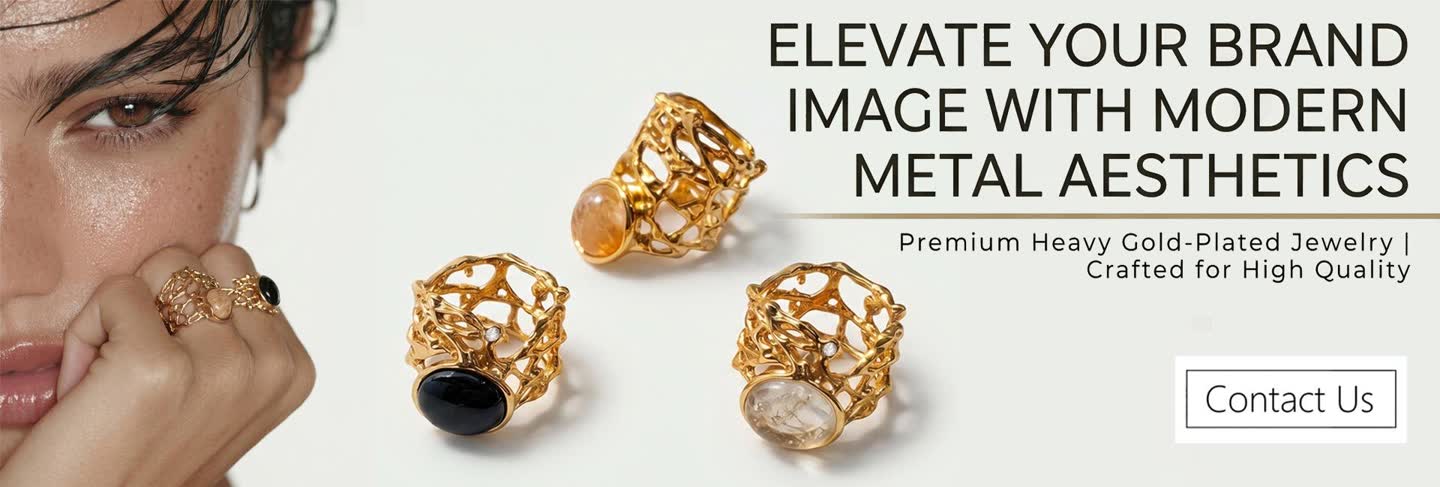
Brass is a copper-zinc alloy commonly used for fashion jewelry components and detailed shapes. It can be suitable when the design needs a particular casting form, a broad finish choice, or a more accessible material cost. Gold-plated brass is common in statement earrings, pendants, rings, and decorative components — and it is one of TEYING's two core lines.
The buyer should still specify the base alloy, component materials, surface preparation, plating route, and any required testing. A gold-colored brass piece is not the same as a solid-gold product, and a plated finish can change with contact, moisture, chemicals, friction, and care. If the customer has sensitive-skin concerns, the complete skin-contact specification matters more than the word “brass” alone.
Brass can be a strong choice for a new collection when the design and retail price are the main priorities, but the finish and customer-care language must be precise. Avoid writing “waterproof” or “never fades” without a defined test basis.
925 silver: a precious-metal signal with different production considerations
925 silver, also called sterling silver in many markets, contains 92.5% silver with the balance made up of other alloy content. It gives a brand a different material story and can support a higher price position than a fashion brass base. It is often considered for rings, pendants, earrings, and pieces where the buyer wants the material itself to be part of the product narrative.
Silver can tarnish over time because of environmental exposure and is not automatically maintenance-free. Plating, stone setting, soldering, polishing, and component selection still need to be controlled. Ask how the factory identifies the metal, what hallmark or documentation is available for your market, and whether posts, backs, chains, and clasps use the same or a different material.
For a premium SKU, request a sample that lets you check weight, surface, edge finishing, stone security, and the way the material supports the design. Material authenticity and finish appearance are separate checks.
A simple decision framework
Choose brass when
- The collection is fashion-led and price-sensitive.
- The design needs detailed casting or decorative volume.
- The brand is prepared to specify finish and care language clearly.
Consider 925 silver when
- The material story supports a premium or giftable position.
- The buyer wants sterling silver as part of the product value.
- Weight, tarnish care, documentation, and finish are planned together.
These are starting points, not blanket recommendations. A factory should review the actual drawing, dimensions, components, finish, and order plan before confirming the material.
Buyer checklist before approving a material
- Base material and alloy or grade per SKU
- Material of posts, clasps, chains, backs, and inserts
- Expected weight and dimensions
- Finish: polish, plating, enamel, or antique treatment
- Customer skin-contact and compliance requirements
- Available test or supplier documentation
- Care instructions for the final product page
- Sample approval criteria for surface, color, comfort, and function
- Packaging and labeling language
- Bulk quantity and target retail position
TEYING’s gold-plated jewelry manufacturing page explains how plating routes and thickness are confirmed by project, and the 925 sterling silver jewelry page covers silver line questions. For a broader decision, review the jewelry manufacturing FAQ.
FAQ
Is brass always cheaper than 925 silver?
Usually, but not as a guarantee. Component choice, plating thickness, stone setting, and quantity move the cost of both materials. Compare quotes on the same SKU specification, not on the material name alone.
Is 925 silver waterproof?
“Waterproof” is not a responsible blanket description. Silver, plating, stones, and components respond to wear and exposure differently. Use a defined specification and care guidance instead.
Can one collection use both brass and 925 silver?
Yes. A mixed strategy can make sense when hero pieces, fashion drops, and everyday basics have different price and performance goals — many collections run gold-plated brass fashion pieces alongside a sterling silver hero piece.
What should I ask for if a supplier only says “gold plated”?
Ask for the base metal, the plating route and thickness, the color reference, and the finish test basis. The words alone are not enough for a quality decision.
The material choice becomes clearer when it is attached to a real product brief. Send TEYING a reference image, target customer, quantity, finish, and target price through the quote form, and ask for a sample plan that tests the decision before bulk production.
Choosing the material for each SKU?
Send the product use, finish, target price band, and quantity so material trade-offs can be reviewed with the design.
Request a Factory Quote